Build the Capabilities Your Organization Needs to Deliver Higher Value & Drive Better Performance in the AI Era
FutureWorkforce.ai helps organizations translate business priorities into strategic workforce plans, develop the human and AI-enabled capabilities those plans require, redesign how work gets done, and measure the impact on business performance.

Solving organizational problems through capability building
We start with the business problem, then build the skills, services, content and processes needed to solve it.
Data and AI-driven insights that accelerate reskilling
We use data and AI-driven insights to manage reskilling in the context of risk management and growth.
Tailored content that drives knowledge and skills acquisition
Our solutions focus on skills that transfer to the job, using proven pedagogical strategies and techniques supported by data and AI capabilities.
AI adoption is rising. Enterprise value is lagging.
Most organizations have given employees AI tools. Far fewer have changed how work is organized to capture the value.
of leaders place their organization in the "reinvention" horizon
where roles, workflows and operating models are redesigned around AI. Source: McKinsey, 2026 survey of 750 employees and leaders.
Organizational readiness outweighs personal readiness
in explaining which organizations capture value from AI, by nearly twice as much. Source: McKinsey, 2026.
From business strategy to measurable results
FutureWorkforce.ai is an integrated, end-to-end partner that helps organizations solve problems through capability building, connected by one line of sight to business outcomes.
↺ RESULTS FEED BACK INTO STRATEGY AND THE NEXT PLANNING CYCLE
Learning to use AI is not the same as creating value with AI
Organizational capability building
The sustained ability to execute strategy, solve problems, innovate, manage risk, make better decisions and deliver measurable outcomes.
Workforce transformation
Changing how work is performed: task analysis, workflow and job redesign, human–AI collaboration, skills development, talent mobility, leadership and change management.
AI adoption
Helping people and teams use AI tools effectively: literacy, proficiency, experimentation and practical use.
AI is a powerful enabler, but not the answer to every business problem. We start with the outcome and work back to the right mix of people, process, data and technology.
The six questions we help leaders answer
What business outcomes must we achieve?
What work and organizational capabilities will that require?
How will AI and other technologies change the work to be done?
What capabilities do we have today, and where are the gaps?
How should we close those gaps?
Through development, job redesign, redeployment, recruitment, partners, technology or organizational change.
How will we know the new capabilities improve performance?
Solve today's problems. Build tomorrow's capabilities.
While we help you solve your immediate business problems, we build the capabilities you will need for the future. It is a dual track — meeting immediate needs and preparing for what comes next — with the aim of high-impact outcomes for your workforce and your business.
Courses do not change workflows
Skills not applied on the job fade, and redesigned work needs more than new knowledge.
Tools do not create capability
AI tools raise individual productivity; enterprise value needs redesigned roles, processes and decision rights.
Activity is not impact
Attendance, completion and satisfaction show effort, not results. We measure behaviour change and business outcomes.
Generic programmes miss the point
Every organization's strategy, constraints and risks differ, so we tailor the approach to yours.
Outcomes agreed and baselined at the start of every engagement
- Productivity and operational efficiency
- Revenue growth and customer value
- Quality, consistency and decision effectiveness
- Cost optimisation and resource utilisation
- Risk management, cybersecurity and regulatory compliance
- Innovation and time to market
- Workforce agility, redeployment and resilience
- Employee performance, engagement and retention
- Responsible and sustainable value from AI
Strategic goal
Promote customer centricity
Strategic goal
Foster a data-driven culture
Strategic goal
Optimise ICT (information and communications technology) infrastructure
Strategic goal
Drive sustainable profitability
Start with your business priorities, not a course catalogue.
Tell us the outcome you need to achieve. We will help you work out the capabilities it requires, where the gaps are, and the fastest credible route to close them.
Measure AI by the Value It Creates, Not by How Much It Is Used
Counting users, licences or AI tool usage shows activity, not value. The question that matters is whether AI can perform or support real work at acceptable quality and sustainable cost — and whether the capacity it frees is redeployed to higher-value work. Every engagement we run is built on that economic test.

Where AI creates value in existing work
The value at stake in any area of work depends on two things: how much cheaper AI-supported work is than the fully loaded cost of people doing it, and how much of that work there is.
Ten principles that guide every engagement
Value, not adoption
We measure the economic value AI creates in real work, not the number of users, copilots deployed or AI tools in use.
Quality at sustainable cost
AI output must meet the same acceptance standards as human work for that task — factual accuracy for drafting, safety and regulatory thresholds for sensitive work — at a cost the business can sustain.
Prioritise by value at stake
We rank opportunities by value advantage multiplied by volume of work, not by how appealing a pilot looks.
Augment expertise first
The strongest economics usually come from augmenting expensive expert work — preparation, analysis and drafting — rather than replacing roles or automating low-cost tasks.
Economics are local
The same use case can pay off in a high-wage market and not in a lower-wage one. We assess every case against your own labour costs and operating context.
Effective cost, not headline price
Usage often grows faster than unit prices fall. We manage AI cost alongside adoption — model choice, usage governance and cost per useful outcome — through AI financial operations (AI FinOps).
Redesign the workflow
AI changes the mix of human work — towards review, validation and escalation — rather than removing it. Value comes from redesigning the workflow around that shift.
Stress-test before scaling
We test every business case under both higher and lower AI cost scenarios, and size the downside, before committing to scale.
Build resilient human–AI workflows
Hybrid workflows shift work between people and AI as economics change. We retain human expertise where returns are marginal, secure pricing protections, and design processes that keep service levels if AI use is reduced or paused.
Redeploy before you deploy
Without a plan, freed capacity becomes idle time that no one measures. Every AI initiative carries redeployment targets and a reskilling plan from day one.
How we turn the principles into results
Map the opportunity
Analyse work task by task, separating what AI can address from what needs human judgement — starting with your largest cost centres.
Size and prioritise
Rank use cases by value at stake, so investment goes where the economic prize is largest.
Manage cost with adoption
Track cost per useful outcome from the start, with usage governance and the right model for each task.
Stress-test the case
Model higher and lower cost scenarios and size the downside before scaling.
Plan redeployment first
Set redeployment targets and reskilling plans before AI goes live, so released capacity moves to higher-value work.
Tailored, high-impact and built with you
Tailored to your needs
We are committed to high-impact solutions tailored to your needs and to long-term skills acquisition.
Actionable plans
Our client success team helps you build actionable plans that focus on the capabilities your teams need most.
A connected learning ecosystem
Business managers, learners and L&D (learning and development) teams are connected in an ecosystem we create with you. Together we identify and set your KPIs (key performance indicators), and help you achieve them.
One integrated methodology, from strategy to results
Stage 6 feeds back into Stage 1, so the plan stays current as priorities, technology and skill needs change.
Business outcomes and strategic priorities
We start with your strategy, problems, opportunities and constraints, and identify where you need gains in performance, growth, cost, risk, innovation or resilience. We agree baselines, targets, accountable business owners and how success will be measured.
Strategic workforce and work planning
We analyse how the organization must operate in future: critical activities, workflows, roles and capabilities across short, medium and long horizons. Scenarios for AI adoption, market shifts and growth decide which work to retain, redesign, augment, automate, create or discontinue.
Current-state capability assessment
We assess today's capabilities and capacity against future needs, drawing on role and skills assessments, performance data, manager insight, employee feedback and labour-market information. The result: critical gaps, transferable skills, dependencies and workforce risks.
Capability and workforce transformation strategy
We build an action plan to close the gaps, weighing each option for feasibility, cost, timing, business value, employee impact and risk.
- Build — learning, experience, coaching, workplace application
- Buy — strategic recruitment
- Borrow — partners, consultants, specialists
- Bind — retain critical talent
- Redeploy — move people into higher-value work
- Bot — augment or automate tasks with technology, including AI
- Redesign — roles, workflows, operating models
Strategic choices, not a checklist; most plans combine several.
Capability development and implementation
Targeted interventions tied to real business needs: formal learning combined with workplace application, guided experimentation, coaching, manager reinforcement, team projects and performance feedback — embedded in the daily workflow where possible. Human capabilities are built alongside technical and AI skills, prioritised by business need.
Performance measurement and continuous improvement
We evaluate whether development and transformation produce measurable results, using the Kirkpatrick model with emphasis on Level 3 (behaviour on the job) and Level 4 (business results). Feedback loops refine the workforce plan.
Six levels of evidence, from learning to resilience
| Level | What we look for | Example evidence |
|---|---|---|
| Learning and capability acquisition | New knowledge and skills gained | Assessments, skills demonstrations |
| Proficiency and behaviour change | People work differently | Manager observation, work samples (Kirkpatrick Level 3) |
| Application in actual work | New practices used in live workflows | Process and system data |
| Operational performance | Measurable improvement in the work | Cycle time, quality, error and rework rates |
| Business and financial outcomes | Contribution to strategic targets | Revenue, cost, risk and customer measures (Kirkpatrick Level 4) |
| Long-term capability and resilience | The organization can keep adapting | Internal mobility, time to redeploy, succession depth |
Built on over 30 years of experience
We have drawn on over 30 years of experience in training and development and professional services to develop and refine how we design solutions to your problems.
Content
Tailored, relevant content from specialists.
Pedagogy
Proven pedagogical strategies and techniques.
Process
Holistic processes integrated with your needs.
Technology
Data and AI capabilities that boost learning efficiency.
Platform
Hybrid, omni-channel delivery platforms.
Plan the Work Your Strategy Requires — Not Just the Headcount
Strategic workforce planning (SWP) aligns your people strategy with your business strategy. It answers a practical question: what work, skills and capacity will we need to deliver our goals over the next one to five years, and how will we secure them?

The business problem
Headcount plans that lag the work
Many organizations still plan headcount one budget cycle at a time. That struggles when AI changes the tasks inside roles faster than job titles change. The result is hiring for yesterday's roles, reskilling without a clear target, and gaps that surface only when a strategic initiative stalls.
Why it matters now
- Planning must start from the work to be done, not the existing organization chart.
- AI augments some tasks, automates others and creates new work; each needs a different response.
- Workforce decisions span HR, IT, finance, risk and business leadership. Gartner's 2026 guidance stresses shared ownership between the CHRO (chief human resources officer) and CIO (chief information officer), measured by shared indicators.
Nine practical steps from strategy to a living workforce plan
Align workforce and corporate strategy
Translate objectives into the capabilities and capacity they depend on.
Understand future demand
Identify critical activities, tasks, roles and skills across time horizons.
Understand talent supply
Assess capabilities you have, those in the market, and those you can develop.
Model scenarios
Test plans against paths for technology, economy, demographics and your industry.
Segment the workforce
Focus on the roles and skills that matter most to value and risk.
Total cost of the workforce
Compare the cost and timing of building, buying, borrowing or automating.
Choose the sourcing mix
Develop internally, recruit, use partners, or support with technology.
Connect plans to action
Link to deployment, reskilling, succession, retention and performance.
Establish governance
Accountable owners and a recurring planning cycle keep the plan current.
Capabilities required
Workforce and skills data you can trust; business leaders who own workforce decisions; HR, finance and IT working from shared assumptions; and a regular cadence that revisits the plan as conditions change.
How we measure progress
- A workforce plan approved by business owners, tied to strategic objectives
- Critical roles and skills identified, with gap size and closing route agreed
- Time to fill or develop critical capabilities
- Share of critical roles filled internally; redeployment rates
- Plan accuracy reviewed each planning cycle
Redesign the Work, Not Just the Tools
AI creates value when organizations change how work is done: which tasks people do, which tasks AI handles, how teams are organized and who decides what. We help you make those changes deliberately, with your people rather than around them.

Isolated productivity gains rarely reach the bottom line
Many organizations add AI to existing processes and see gains that never show up in enterprise results. Deloitte's 2026 Global Human Capital Trends report stresses redesigning work rather than layering AI onto it, and McKinsey's 2026 research identifies workflow redesign as a leading factor in turning AI adoption into measurable value.
| Change | What happens | Workforce response |
|---|---|---|
| Augment | AI supports people in existing tasks | Build AI fluency and judgement; adjust performance expectations |
| Re-engineer | Whole workflows are redesigned around human–AI collaboration | Redesign roles, team structures and decision rights |
| Create | New work, products or services become possible | Develop new capabilities; create new roles and career paths |
Seven levers of AI-era workforce transformation
Deconstruct jobs into tasks
Decide the right division of work between people, AI and other resources.
Redesign workflows end to end
Aligned with business goals, rather than automating isolated tasks.
Redesign roles and job structures
Including task ownership and decision rights.
Redeploy released capacity
Into higher-value work, growth and innovation, with reskilling and mobility pathways.
Human–AI performance management
New expectations, measures and oversight for augmented work.
Align leadership
Business, HR, IT, finance and risk agree shared responsibilities and guardrails.
Lead the change
Employee-centred change management that builds trust.
Digital transformation and job redesign
Our transformation services, updated for the AI era
- Digital transformation — data, analytics and AI; soft skills to manage new technologies; job redesign
- Data asset management
- Data governance
Collaborate, co-create and scale — so job redesign becomes repeatable
We run workforce transformation as a structured lab, bringing together leaders, practitioners and partners from one organization, or from several organizations in the same sector, to redesign roles together and share what works.
Collaborate
We convene workgroups by business area or sector, with committed pioneer teams, to tackle shared transformation challenges. Every employee builds essential AI skills through recognised programmes:
- AI principles
- AI governance and responsible use
- Prompt design and practical AI use
Co-create
With your teams, we develop practical approaches to job redesign and training. The output is a set of role pathways: for each role family, how the role is augmented, redesigned or newly created, and the skills it now needs. These drive targeted upskilling and reskilling.
Scale
Insights and pathways are captured in a job redesign playbook: templates, role definitions and lessons learned that other units, or other organizations in the sector, can adopt without starting from scratch.
How roles change, family by family
Each pathway shows which roles are augmented, which are redesigned and which new roles emerge. The examples below illustrate the kinds of pathways we build with clients.
Pathway
Leaders
The leadership capabilities needed to run an AI-enabled organization: setting direction, governing AI, redesigning teams and leading change.
Pathway
Client-facing professionals
How relationship and advisory roles change, and the new skills they need as AI handles preparation and analysis.
Pathway
Operations
Augmented roles such as compliance and claims officers, and new roles such as AI solutions specialists and bot specialists.
Pathway
Specialist and risk roles
Expert roles such as underwriting, risk and fraud support, redesigned around human judgement with AI support.
Who does what in the lab
| Participant | Role in the lab |
|---|---|
| Pioneer organizations and teams | Commit leaders and practitioners, share real roles and workflows, and co-create the pathways |
| Workgroups | Bring together peers in one business area or sector to work on shared challenges and test redesigned roles |
| FutureWorkforce.ai | Designs and facilitates the lab, leads job redesign and training design, measures results, and builds the playbook |
| Employees | Build AI skills, help redesign their own roles, and adopt new ways of working |
| Learning and technology partners | Provide recognised programmes, specialist content and platforms where they are the best route |
Output 1
A workforce-wide AI foundation
Essential AI skills across the whole workforce, not just specialist teams.
Output 2
Role pathways
Clear, role-by-role maps of augmented, redesigned and new roles, with the skills each needs.
Output 3
A job redesign playbook
Reusable guidance that lets the approach scale across units or a whole sector.
Capabilities required
Leaders fluent enough in AI to redesign work; clear governance for AI ethics and risk; managers who can coach people through new roles; and trust between the organization and its employees. McKinsey's 2026 survey found trust in the organization to be the critical readiness factor at every stage of AI transformation.
How we measure progress
- Workflows redesigned and adopted in live operations
- Cycle time, quality and cost against baseline
- Hours of capacity released and where they were redeployed
- Internal mobility and redeployment rates
- Employee confidence and trust through the change
Learning That Changes How Work Gets Done
We design and deliver capability development that transfers to the job and shows up in performance. Learning is one essential component of capability building, aligned to the outcomes your strategy requires.
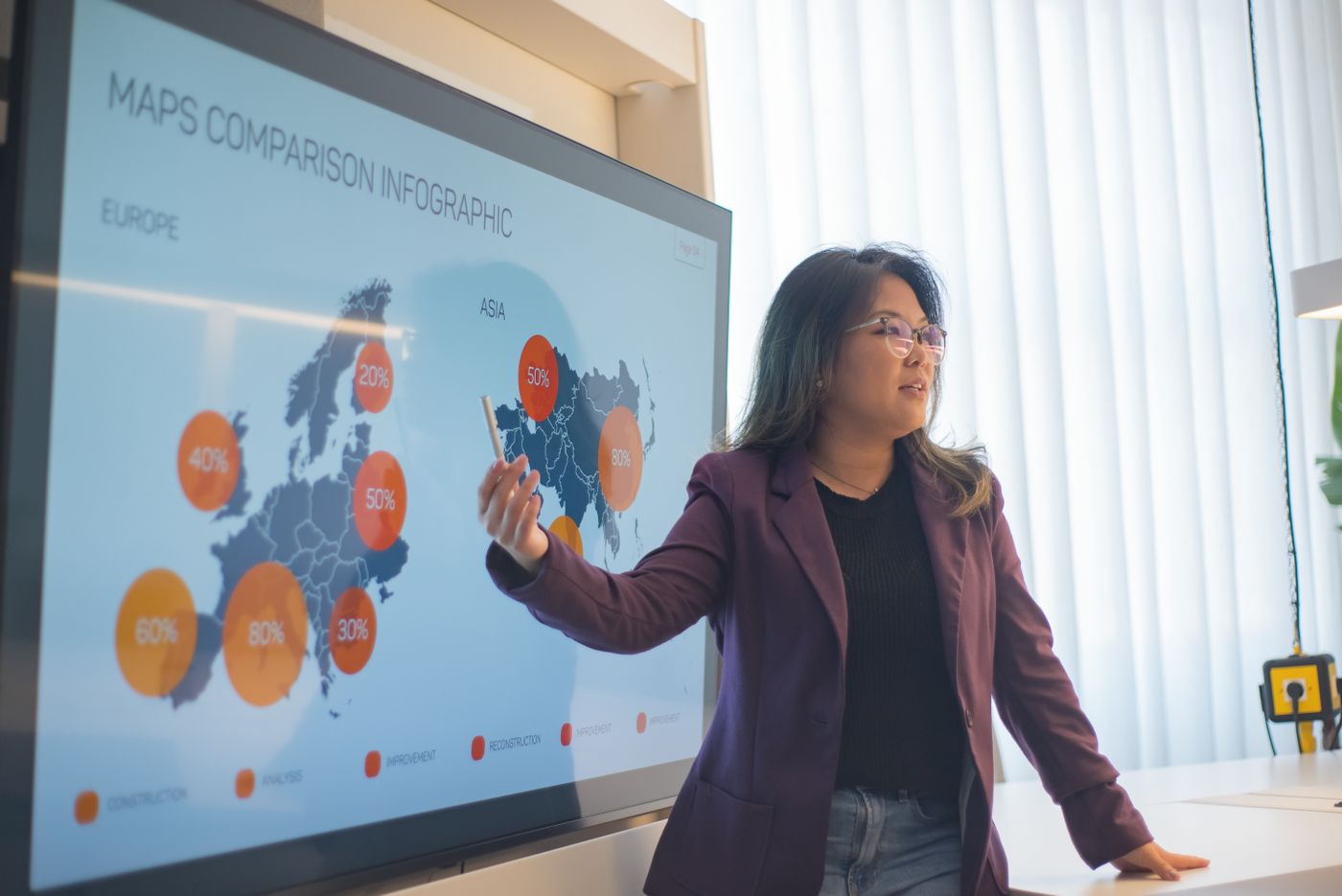
Calibrated to your context and the problem to be solved
We understand the context and the problem, then calibrate content, pedagogy, process, technology and platform to improve performance.
Agile learning
- Accelerated, flexible learning embedded in the workflow
- Omni-channel delivery across platforms
Collaboration
- MNCs (multinational corporations) and global brands
- Institutions of higher learning
- Trade associations and chambers of commerce
Data, analytics & AI
- Knowledge assets
- Insights through learning and performance analytics
- AI to boost learning efficiency
Performance
- Performance management system
- Two-pronged approach: risk management and value creation
Solution design
Impactful skills acquisition
Proven pedagogical strategies and techniques supported by data and AI capabilities.
- High-quality learning experiences through a hybrid platform
- Learners, managers and L&D (learning and development) teams connected in skill-building pathways
- Hybrid pathways with engaging, real-world activities
- Tailored, relevant content from specialists in their fields
End-user validation
Tested in a real-world setting
Before any deployment, we test our solutions in a real-world setting. Business managers, learners and L&D teams give feedback to validate that we are on the right track.
Training solutions
Hybrid micro-learning at scale
To overcome barriers to skills transfer, we focus on:
- Relevance — the right skill, for the right learner, at the right moment
- Tailored pedagogy — poor content plus poor design equals poor skills transfer
- Training outcomes — engagement that sustains motivation and protects customer experience
Prioritised by business need, not by trend
Human
Critical thinking, problem formulation, systems thinking, communication, collaboration, creativity, leadership, adaptability and sound judgement.
Domain expertise
The specialist knowledge your strategy depends on.
Digital & AI
AI literacy and fluency, digital dexterity and responsible AI use.
Management
Coaching, reinforcing new practices and leading redesigned teams.
Quality means adding value at every step of the learning process
Efficacy of learning
Learnability and gain for learners.
Comprehensive yet nuanced evaluation
An evaluation strategy that cuts across line functions.
Impact of training
Achieving business outcomes.
Return on investment
ROI on training, achieved in a sustainable manner.
Solution Finding Requires Skills, Services, Content and Products
We take a tailored, integrated approach to your problem, drawing on six connected service pillars. Each engagement combines the pillars your outcome needs.
Five delivery modes, tailored to each client
These services are delivered through engagements tailored to each client, not through a single packaged software product.
| Mode | What it means |
|---|---|
| Advisory | Strategy, planning, diagnosis and design, delivered by our team and specialists |
| Implementation | Hands-on support to redesign work, deploy programmes and manage change |
| Learning | Tailored programmes, pathways and content, delivered in hybrid formats |
| Analytics | Learning, performance and workforce insights from your data |
| Technology | Solutions designed and developed with partners and clients for specific needs |
Problem, approach and measure for every service
Strategic Workforce & Capability Planning
Problem: workforce plans that do not reflect how AI is changing the work. What we do: align workforce strategy to business strategy, analyse demand and supply, model scenarios and choose the sourcing mix. Measured by: critical gaps identified and closed; time to fill critical capabilities.
AI-Era Workforce Transformation
Problem: AI adoption without enterprise value. What we do: task and workflow redesign, job redesign, redeployment and change management, delivered through our Workforce Transformation Lab (collaborate, co-create, scale). Measured by: process performance against baseline; capacity redeployed.
Learning for Performance & Business Impact
Problem: training that does not transfer to the job. What we do: solution design, tailored training, skills acquisition and learning pathways, end-user validation, hybrid micro-learning. Measured by: behaviour change and results (Kirkpatrick Levels 3 and 4).
Learning & Performance Analytics, Training Effectiveness and ROI
Problem: no evidence that capability investment pays off. What we do: a comprehensive yet nuanced evaluation strategy across line functions; learning and performance analytics; measurement of training impact and ROI (return on investment). Measured by: agreed outcome metrics tracked from baseline.
Reskilling managed in the context of risk and growth
We use data and AI-driven insights to manage reskilling in the context of risk management and driving growth, focusing on common problem areas and growth challenges.
Risks
- Cybersecurity
- Personal data protection
- Digital asset protection
- Regulatory compliance
- Intellectual property protection
Growth
- Marketing (especially digital)
- Internationalisation
- Technology commercialisation
Transformation
- Digital transformation in the AI era: data, analytics and AI; soft skills to manage new technologies; job redesign
- Data asset management
- Data governance
Data, AI & Technology Enablement
Problem: data and technology that do not support better decisions. What we do: AI-enabled dashboards, API (application programming interface) strategy, data integration, data management and related services, designed and developed with partners and clients.
Data, AI and Technology That Serve the Business Outcome
We design and develop AI-enabled products and services that help enterprises, organizations and governments improve efficiency, optimise cost, enhance brand perception and promote greater customer centricity. Technology is chosen to fit the capability being built.

Platform
We develop for our partners and clients
- AI-enabled dashboard — a centralised platform with interactive dashboards for real-time insight and decision-making
- API (application programming interface) gateway — easy integration with enterprise systems and third-party applications
- Security and compliance — security measures and compliance with data protection regulations
Technology services
We design and develop with
- Large language models (LLMs) — current leading models for natural language understanding and generation
- Machine learning (ML) — data analysis, predictive analytics and anomaly detection
- Computer vision — image and video analysis
- Cloud infrastructure — scalable platforms such as AWS (Amazon Web Services), Microsoft Azure or Google Cloud
- IoT (Internet of Things) integration — sensors and devices for data collection and real-time monitoring
API strategy
- API documentation — comprehensive documentation to help developers integrate with your AI-powered solutions
- Developer support — support and forums for technical queries and issues
- Scalability — APIs designed to accommodate increasing demand
Data
- Data lake and data warehouse — centralised storage for easy access and analysis
- Data quality assurance — quality checks and governance practices that keep data accurate
- Data analytics — in-depth analysis of historical and real-time data
- Data monetisation — creating value from data by offering insights to partners or customers
Process
Data collection and integration
Gathering operational, customer and market data from across the enterprise.
Data preprocessing
Cleaning, normalising and transforming data for analysis.
Predictive modelling
Models for demand forecasting, quality control and resource allocation.
Customer feedback loop
Continuous analysis of customer interactions to improve offerings.
Optimisation framework
Algorithms for resource optimisation, supply chain management and pricing.
Agile development
Agile software methods to respond quickly to changing market demands.
Partnerships That Bring the Best Expertise to Your Problem
We work with experts in their domains — technology, financial management and professional services — and incorporate their latest findings into our solutions.

What our partners contribute
Best-of-breed solutions in
- Learning content
- Pedagogical strategies and techniques
- Holistic processes integrated with your needs
- Cloud platforms for learning, team and project management
- AI and data services that generate useful insights
Who we collaborate with
A network across sectors
- MNCs (multinational corporations) and global brands
- Institutions of higher learning
- Trade associations and chambers of commerce
- Learning-content providers, professional experts and technology partners
How partnership works for clients
We remain accountable for the outcome and the integrated design. Partners contribute specialist content, platforms or expertise where that is the best route to the capability you need — the "borrow" option in a workforce strategy.
Join a Workforce Transformation Lab
Collaborate, co-create and scale with peers in your sector
Organizations can take part as pioneer partners in a lab: building a shared AI foundation across their workforce, co-creating role pathways, and contributing to a job redesign playbook for their sector. See how the lab works →
Become a partner
If you are a content provider, institution, industry body, professional expert or technology firm, and your expertise helps organizations build capability for the AI era, we would like to hear from you.
Helping Organizations Solve Problems Through Capability Building
We started as an integrated, end-to-end platform for reskilling, tailored content and services. As AI changes how work is done, we have broadened that mission: helping enterprises, governments and other organizations build the capabilities to perform, adapt, compete and grow — measuring success by business impact rather than training activity.

Five principles behind every engagement
Outcomes first
Every engagement begins with the business result to be achieved.
Capability over activity
We build lasting organizational ability, not course volumes.
People and AI together
AI is a powerful enabler; human judgement, expertise and trust remain decisive.
Tailored, not generic
Every organization is different, so every solution is designed for its context.
Measured honestly
We track behaviour change and results, and say plainly what the evidence shows.
Over 30 years in training, development and professional services

Zaid Hamzah
Founder
AI/Data Strategist & Practitioner · Learning & Development Specialist & Trainer
Executive Education Fellow, Advanced Computing for Executives, School of Computing, National University of Singapore
Zaid Hamzah is an AI/Data strategist and practitioner specializing in AI value creation, AI in law, finance and cybersecurity, and AI governance. An AI patent holder and a Learning & Development (L&D) strategist and practitioner, he is currently an Executive Education Fellow at the National University of Singapore (NUS) School of Computing's Advanced Computing for Executives centre, where he runs programmes on AI Innovation Management, Intellectual Property Rights in AI Innovation, and Commercialisation of AI Innovation.
Zaid is deeply involved in AI research and development (R&D) and innovation. His AI patent relating to food supply chain risk management was granted by the Intellectual Property Office of Singapore in December 2023. He is currently involved in AI research and innovation in agentic AI, decision intelligence and cybersecurity.
As an educator and industry-based trainer in AI and machine learning, Zaid focuses on applied learning to secure corporate outcomes and business impact that deliver long-term value. He has trained thousands of professionals across many industries, including technology, law, banking and finance, in Singapore, Malaysia, Indonesia and India. At undergraduate level, he has taught legal AI at the Singapore Management University School of Law.
Author of 10 books spanning law, technology, intellectual property and AI, Zaid has over 30 years of professional experience. He has previously served as Microsoft's Director for intellectual property and commercial software; Senior Legal Advisor to Singtel's joint venture with Warner Bros and Sony Pictures; Chief Regulatory, Legal & Compliance Officer at publicly listed Telekom Malaysia; Associate at Khattar Wong & Partners (Singapore law firm); and in Singapore Government service. He holds a law degree from the National University of Singapore and completed his Master's in International Relations at the Fletcher School of Law and Diplomacy, Tufts University, on a Fulbright scholarship.
Zaid is a member of the Board of Directors of NIE International (National Institute of Education, wholly owned by Nanyang Technological University). He is also an Adjunct Senior Fellow at the S. Rajaratnam School of International Studies (RSIS), Nanyang Technological University, where he specializes in cybersecurity governance, law and investigations.
Recent training and capability-building work
AI & digital transformation capability building
Programmes for Cybernatics Pte Ltd, Singapore, covering AI and machine learning deployment in cybersecurity, focused on applying knowledge and skills in the workplace.
Livestock rearing & commercialization
Training and development for Aliyah Rizq Holdings Pte Ltd covering legal agreements, compliance and customer engagement.
Board guidance, NIE International
Strategic guidance for NIE International's go-to-market programmes in China, ASEAN (Association of Southeast Asian Nations) and the Middle East.
AI for cybersecurity, NUS Enterprise
Trainer for the NUS Enterprise cybersecurity programme; trainees included scores of Singapore-based cybersecurity services companies.
Financial compliance, International Compliance Association
Trained hundreds of banking and finance executives on the data aspects of financial compliance.
Legal AI, Mumbai and Delhi
Trained 33 senior lawyers from multiple organizations and law firms.
AI governance, NUS Chief Technology Officers programme
Trainer on AI governance for participants from hundreds of multinational corporations and small and medium-sized enterprises (SMEs), in Singapore and internationally.
Legal AI for Malaysian banks
Trainer on legal AI for banks in Malaysia, including CIMB and RHB, delivered through Marcus Evans.
Teaching and training roles
Present
- Executive Education Fellow, National University of Singapore, School of Computing (since March 2022), teaching five courses: AI Innovation Management; Intellectual Property Protection of AI Innovation; Commercialization of AI Innovation; AI and Data Governance; AI in Finance.
- Adjunct Senior Fellow, S. Rajaratnam School of International Studies (RSIS), Nanyang Technological University (since October 2017), teaching "Cybersecurity Law, Cyber Terrorism and Managing the New Geo-Strategic Risks".
- Trainer, SSA Academy (a registered training provider accredited by SkillsFuture Singapore; since 2019): Data Strategy & Data Asset Management; Fundamentals of Artificial Intelligence; Introduction to Generative AI; AI Innovation and Value Creation.
- Course content developer and instructor, "Managing Data & AI for Regulatory and Financial Crime Compliance" (Module 6 Diploma), International Compliance Association (United Kingdom) and International Compliance Training Academy (ICTA), Singapore.
- Trainer in Cybersecurity Law, Governance, Risk & Compliance, Cyber Defence Academy (part of SSA Academy).
- Masterclass trainer, "Cybersecurity & Payment Services" and "Effective Use of Technology in Governance, Risk & Compliance", International Compliance Association and ICTA.
Past
- Adjunct Faculty, School of Law, Singapore Management University: "Legal Analytics and Artificial Intelligence in Law" (Academic Year 2019–2020).
- Intellectual Property Management, School of Information Systems, Singapore Management University (2016).
- "Strategic Management of Intellectual Property", School of Communication, Nanyang Technological University.
- Trainer at the IP Academy, Singapore, and regular trainer at World Intellectual Property Organization (WIPO) programmes in Singapore, Malaysia and China.
- Developed the online course for the law, investigation and ethics domain of the Certified Information Systems Security Professional (CISSP) programme, Institute of Systems Science, National University of Singapore.
- Visiting Associate Professor, University of Malaya law school (E-Business Law); Adjunct Lecturer, Universiti Teknologi Malaysia (E-Security Law & Strategy).
- "Laws of Investment and Financial Market", RMIT programme with SIM GE, Singapore (2013–2014).
Start with Your Business Priorities
Would you like to discuss a workforce or capability challenge with our team? Tell us the outcome you need to achieve and what is getting in the way. We will come back with a view on the capabilities involved and practical next steps.
Enquiry
Tell us about your priorities
Join our network
Be part of our mailing list
Receive occasional insights on strategic workforce planning, AI-era transformation and capability building.